Creates SEO-focused content for ClassifyLanka.com promoting Sri Lankan businesses by developing clear, structured articles and directory updates that help you understand, navigate, and discover trusted services across Sri Lanka.
View Bio
Protecting Consumers: Government Initiatives Against High Pricing During Emergencies
Published December 1, 2025 | Last Modified December 1, 2025
Emergencies often create sudden pressure on markets. Whether it’s a natural disaster, a pandemic, or an economic shock, essential goods can become harder to find—and more expensive. Unfortunately, some traders take advantage of these situations by charging excessively high prices. This puts already-stressed families at greater risk. That’s why protecting consumers during crises is more important than ever.
Today, the government and the Consumer Affairs Authority (CAA) play a vital role in preventing unfair pricing and ensuring essential goods remain within reach. This article explores how these agencies act quickly to maintain market stability and protect the public from exploitation.
Price gouging happens when traders dramatically increase prices for essential items during emergencies. While small fluctuations may occur due to supply issues, extreme price jumps are considered unethical and harmful—especially when families are simply trying to secure basic necessities.
Goods Most Vulnerable to Price Increases
During times of crisis, items like rice, vegetables, canned food, bottled water, medication, baby formula, and cooking gas often experience unfair price hikes. These are items people rely on every day, making unreasonable increases especially damaging.
Why Prices Rise During Crises
There are several reasons prices rise, including panic buying, supply disruptions, transportation issues, and in some cases, traders deliberately holding back stock to inflate demand. These challenges highlight why strong monitoring systems are needed to prevent abuse.
The Role of the Consumer Affairs Authority (CAA)
The CAA is the frontline defense against unethical pricing. Their mission is to ensure fair trade practices and protect consumers from exploitation. They take proactive measures to oversee market activities and respond swiftly to complaints.
Market Monitoring and Inspections
CAA officers conduct routine and surprise inspections at supermarkets, groceries, pharmacies, and retail outlets. They check whether prices match official guidelines, verify stock levels, and investigate any suspicious activity reported by the public.
Legal Authority and Enforcement
Under the Consumer Affairs Authority Act and emergency regulations, the CAA has the power to impose price ceilings, seize hoarded goods, file legal cases, and enforce penalties on traders who violate pricing rules. This legal framework allows them to act quickly when problems arise.
Government Initiatives to Prevent High Pricing
To protect consumers during emergencies, the government uses a combination of monitoring, regulation, and public involvement. These efforts help maintain stability even when markets are under intense pressure.
Emergency Price Regulations
Updated maximum retail prices and emergency guidelines ensure that essential goods remain affordable. These regulations can be issued rapidly and adjusted according to the severity of the situation.
Nationwide Inspection Teams
Inspection teams—made up of CAA officers, police, and public health inspectors—work together to identify traders who overcharge consumers. Their field presence serves as a powerful deterrent against unethical behavior.
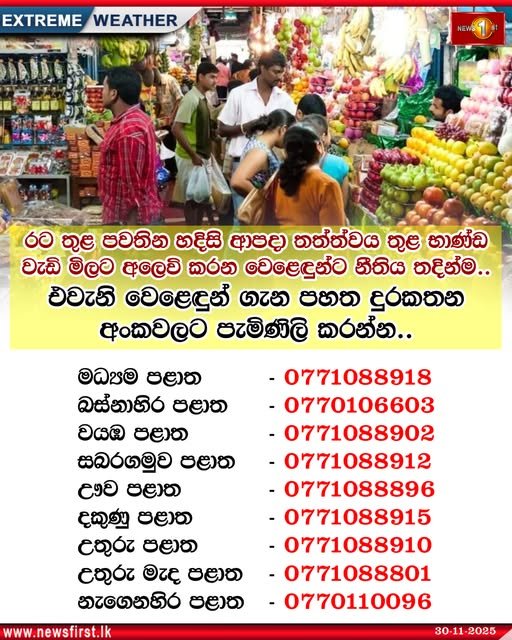
Provincial Hotlines for Reporting Complaints
To make reporting easier, the CAA has released a list of dedicated hotline numbers for each province. This helps ensure complaints are handled locally and efficiently.
Province
Hotline Number
Central
0771088918
Western
0770106603
Northwestern
0771088902
Sabaragamuwa
0771088912
Uva
0771088896
Southern
0771088915
Northern
0771088910
North Central
0771088801
Eastern
0770110096
How Consumers Can Report Overpricing
Consumers are encouraged to report incidents of high pricing through hotlines, email, government websites, or official social media channels. Providing accurate information helps authorities take swift action.
Information to Include When Reporting
To support investigations, consumers should collect:
Photos of the product and price label
Receipts or proof of purchase
Store name and location
Date and time of the incident
Penalties for Traders Who Overcharge
Traders found guilty of price gouging may face heavy fines, confiscation of goods, legal prosecution, and even suspension of business licenses. These penalties are designed to discourage unethical practices and maintain fairness in the market.
How These Measures Help Stabilize Markets
Government oversight helps ensure there are no shortages, prevents black-market activity, and promotes fair distribution of essential goods. When consumers can trust that prices will remain stable, panic buying decreases, and the market functions more smoothly.
Frequently Asked Questions (FAQs)
1. What is price gouging?
It’s when sellers charge excessively high prices for essential goods during emergencies.
2. Can I report a store anonymously?
Yes. Most hotlines accept anonymous complaints.
3. How quickly does the CAA respond?
Officers typically investigate soon after receiving a complaint.
4. Are online sellers monitored?
Yes, online retailers must follow the same pricing regulations.
5. What evidence should I provide?
Receipts, photos, and store details help authorities act quickly.
6. Why do prices rise during emergencies?
Supply disruptions, panic buying, and unethical practices can cause prices to increase.
Conclusion
Protecting consumers during emergencies is a shared responsibility between the government, enforcement agencies, and the public. Through strict monitoring, legal action, and accessible reporting tools, Protecting Consumers: Government Initiatives Against High Pricing During Emergencies ensures fairness even during uncertain times. By staying informed and reporting unethical practices, every citizen plays a part in creating a stable and fair market.
Classify Lanka Directory is a place to popularize your Business and generate leads in Sri Lanka. Get reviews and grow business reputation online. Your company profile can include contacts and description, products, photo gallery and your business location on the map.